Most avoidable Ninja CREAMi failures begin before the blade moves: the pint is uneven, underfrozen, overfilled, assembled with the wrong parts or paired with a program that does not match the base. A short check before processing prevents wasted pints and protects the machine.
Freezing and pint-preparation mistakes
Freezing the pint at an angle
Official Original, Deluxe and Swirl guidance says to freeze the container on a level surface and not to process a base frozen at an angle. If the top is uneven, let the contents soften or melt as the model guide directs, mix them again and refreeze level.
Processing before the base is fully frozen
Ninja guides commonly specify at least 24 hours because the pint needs to reach the processing temperature throughout, not merely form ice on top. A partially frozen base is likely to become soft or liquid. Use the freezer-temperature range in the owner guide for your machine.
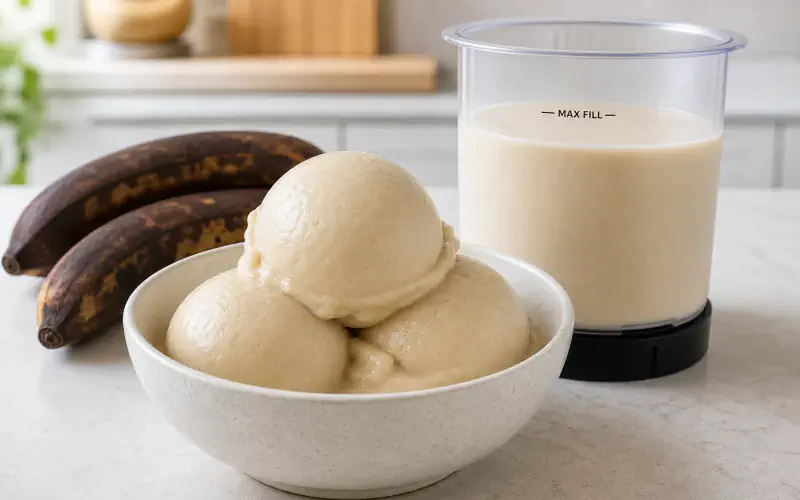
Going above MAX FILL
Overfilling leaves too little working space and can prevent correct assembly. Respect the line for the exact pint; Original, Deluxe and Swirl containers have different capacities.
Freezing loose hard ingredients
Ninja warns not to process a block of plain ice, ice cubes, hard loose ingredients or loose frozen fruit. Fruit must be crushed to release juice or combined into an approved recipe before freezing.
Using an unbalanced shortcut base
Program choice cannot compensate for a mixture with insufficient sugar, fat, protein or other solids. Use an official or tested recipe, especially for very light, sugar-free or high-protein bases.
Assembly and machine-setup mistakes
Use the pint, paddle, outer bowl and lid made for the machine. Swirl pints are not interchangeable with Original or Deluxe containers, and Deluxe pints likewise differ from Original pints.
Never force a part that will not close. Remove the bowl, unplug when instructed, and check:
- the pint is seated in its grooves;
- the paddle is secured and clean;
- the lid alignment marks meet;
- no frozen mixture or debris blocks the seal;
- the machine was plugged in before the outer bowl was installed, as Ninja’s workflow requires.
Forcing a frozen or misaligned assembly can damage the part and hides the cause of the obstruction.
Program-selection mistakes
Selecting the nearest-sounding button is unreliable. Sorbet, Frozen Yogurt and Lite Ice Cream are designed for different base structures. Deluxe drinkable programs also require their own recipe and pour-in; pressing Frozen Drink does not transform an ice-cream base into a drink.
Use the program decision guide for a prepared pint. If the button is missing, check the compatibility table rather than guessing.
Re-spin and liquid mistakes
The first result should be inspected before anything is added. A powdery pint often needs Re-spin with no liquid. Pouring in a large splash before the first cycle or before inspection can make the centre soft while the edges remain firm.
Ninja says not to Re-spin before Mix-In. For refrozen leftovers, follow the owner guide for your machine because the recommended process can differ. The dedicated Re-spin guide gives measured liquid options, stop points and immediate repair guidance.
Mix-in mistakes
Use Mix-In after the main program. Make a central hole to the bottom of the processed portion, add small prepared pieces and run Mix-In.
Ninja’s Original FAQ advises against fresh fruit, sauces, spreads and nut butters as mix-ins because they can water down or distribute poorly. It recommends smaller pieces for hard chocolate, candy and nuts, and larger pieces for softer cookies or cereal. On Swirl, Ninja advises against dispensing soft serve with mix-ins because pieces can clog the nozzle.
Refreezing and leftovers
Before refreezing leftovers, follow the after-serving routine: flatten the surface, replace the lid and return the pint promptly to a level freezer shelf. If the surface freezes unevenly, do not process it in that state. When leftovers become hard, follow the owner guide for your machine. Several Ninja guides recommend repeating the original program rather than Re-spin; reprocessing can crush mix-ins further.
For Swirl leftovers that were dispensed, official support adds a model-specific step: close the pint base, remove the nozzle, rinse any ice cream from the nozzle chamber, reinstall the nozzle, level the surface and then refreeze. Skipping this can block later dispensing.
Real experience
A Swirl mistake worth avoiding
After serving soft serve from the Ninja CREAMi Swirl, the pint went back into the freezer with the white dispenser base still open.
The remaining ice cream froze inside the dispenser and around the bottom of the pint. When the pint was used again, the processing container could not be fitted because the assembly would no longer close properly.
Gentle warming released the ice cream trapped in the dispenser, but the frozen product at the bottom still prevented the pint from being used. Since the pint was needed for another recipe, the remaining ice cream eventually had to be discarded.
The lesson was simple: after dispensing, close the white base and clean the nozzle chamber before returning the pint to the freezer.
Cleaning mistakes
Ninja lists the removable food-contact parts covered here as top-rack dishwasher safe, while the motor base must not enter water. The Swirl white pint base should remain attached. Clean its nozzle cavity gently with water and a small brush, not a knife or sharp tool. Open the base for dishwasher cleaning, then dry it and return it to the correct position for the next workflow.
Cleaning instructions and removable seals vary by assembly. Follow the model’s manual rather than transferring a disassembly step from another family.
When to stop and consult the manual
Stop processing and use official support when:
- an error code persists after the reset described by Ninja;
- the paddle, shaft, bowl or dispense press is stuck;
- the machine makes abnormal grinding or squeaking noises;
- a lid or bowl will not install without force;
- the motor repeatedly overloads;
- an electrical area is wet;
- a Swirl nozzle remains blocked after the official water-and-small-brush procedure.
The machine matters. The Original, Deluxe and Swirl comparison explains why parts and workflows cannot be assumed interchangeable.
Quick pre-spin checklist
- Correct pint and partsAll components belong to this machine.
- Level, solid baseThe pint froze flat for the full recipe time and is solid throughout.
- Below MAX FILLNo frozen base or mix-in blocks the lid.
- Safe recipeNo loose hard ingredients, ice cubes or unsupported shortcut base.
- Correct programThe recipe, machine family and intended Scoop/Soft Serve result agree.
- Swirl base checkedThe white base and nozzle are in the position required for processing, freezing or dispensing.
- No forceIf the assembly does not close normally, remove it and find the obstruction.
Frequently asked questions
Can a pint be processed if it froze at an angle?
No. Official guidance says not to process it. Let it soften or melt according to the manual, recombine it and refreeze on a level surface.
Is 24 hours always mandatory?
Ninja guides commonly specify at least 24 hours so the base reaches the intended processing range. Store-bought ice cream milkshakes and some Mix-In workflows are stated exceptions; do not improvise an exception for a frozen recipe.
Why will the outer bowl not close?
The pint may not be seated, the paddle or lid may be misaligned, or frozen product may obstruct the assembly. Do not force it. Disassemble and check the model’s installation steps.
Can Swirl soft serve contain mix-ins?
Ninja advises against using mix-ins when dispensing because pieces can clog the nozzle. Add toppings after dispensing instead.
Where can a safe first recipe be found?
Use the beginner guide and the beginner-friendly recipe collection, or browse the full recipe index.