Quick Ninja Creami Texture Fixes
Crumbly or powdery after the first spin
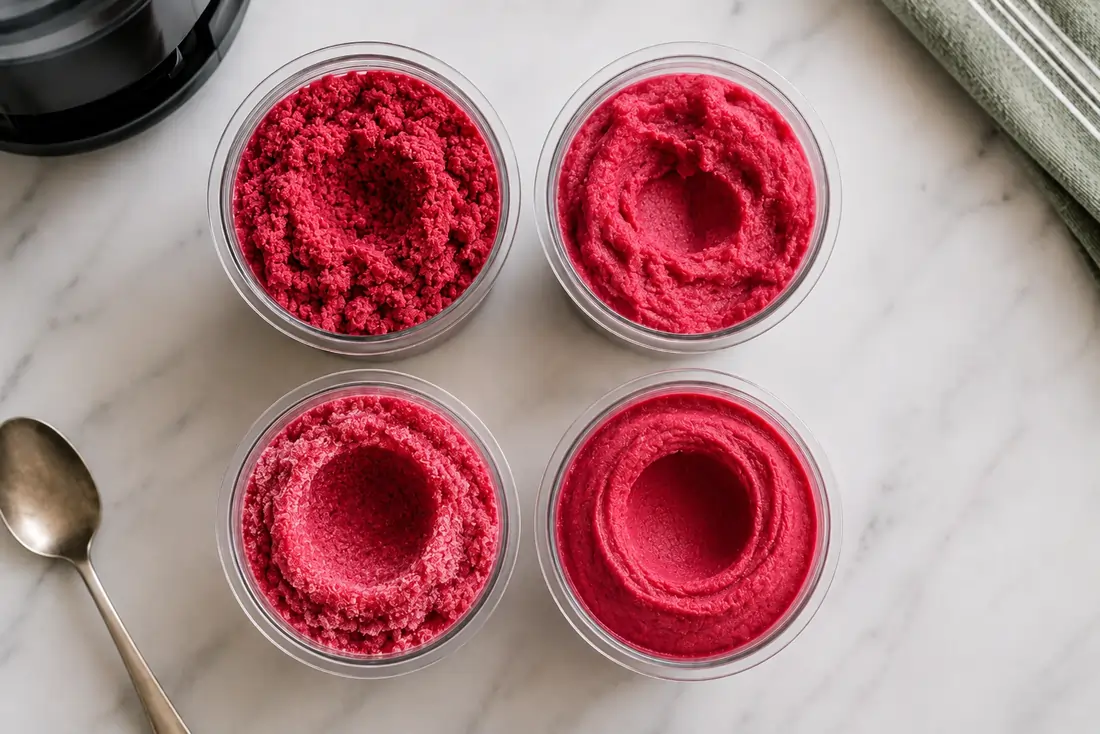
A crumbly texture looks like fine frozen powder that does not hold together. It is common after the first spin, especially with very cold pints, lower-fat bases, fruit-heavy recipes, dairy-free bases or protein recipes.
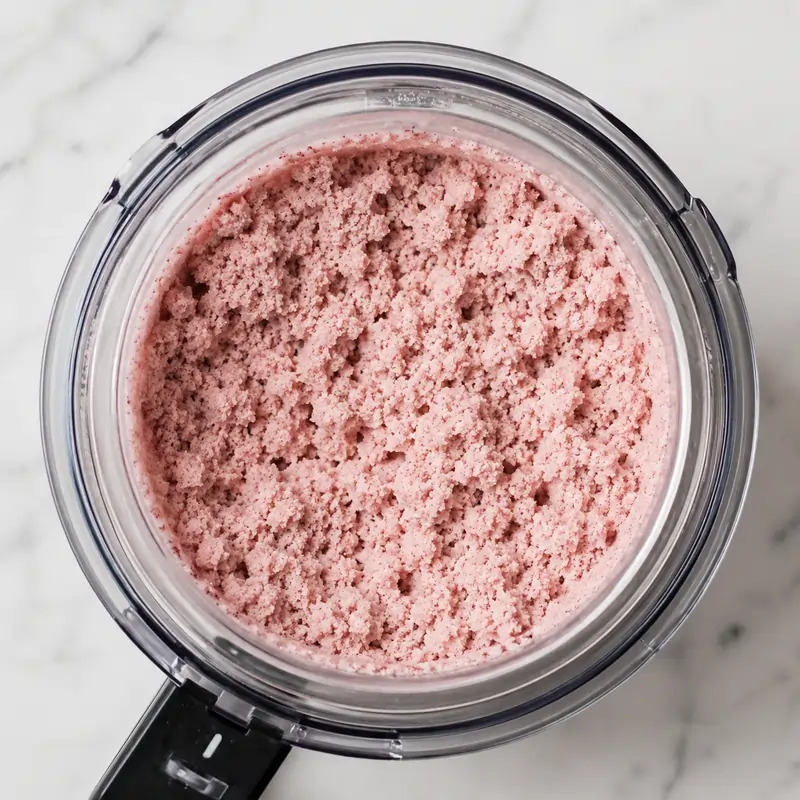
Fix it now
- Re-spin once. Most crumbly pints become smoother after one Re-spin.
- Add liquid only if it still looks dry. Use one tablespoon / 15 ml of the same liquid used in the recipe.
- Re-spin again. Stop once the texture holds together. Too much liquid can make it soft.
Prevent it next time
- Freeze the pint flat for at least 24 hours.
- Use enough creamy base, fruit pulp or solids to give the mixture body.
- Balance protein powder with enough liquid or creamy base.
- Add liquid gradually only after the first spin if needed.
Chalky texture is slightly different. It is more about mouthfeel than appearance, and often comes from protein powder or dry solids. The fix is the same: Re-spin first, then add a small amount of liquid only if needed.
Icy or grainy texture
An icy texture feels hard, crunchy or grainy instead of smooth. This often happens with fruit-heavy recipes, sorbets, very low-fat bases or mixtures with a lot of free water.
Fix it now
- Re-spin once. This can smooth out small ice crystals after the first spin.
- Add liquid only if needed. If it still feels icy, add one tablespoon / 15 ml of liquid and Re-spin again.
- Use the right liquid. For sorbet, use water or fruit juice. For dairy bases, use milk or the original base liquid.
Prevent it next time
- Keep enough fruit pulp, yogurt, milk solids or other body-building ingredients.
- Avoid diluting the base too much before freezing.
- Make sure the pint is frozen solid before spinning.
Too soft or milkshake-like
A too-soft Ninja Creami result looks loose, slushy or milkshake-like. This usually happens when the pint was not frozen solid enough or when too much liquid was added before Re-spin.
Fix it now
- Freeze it again. Put the pint back in the freezer until fully firm.
- Do not add more liquid. More liquid will make the texture even looser.
- Spin again once solid. Only process it again after the base is fully frozen.
Prevent it next time
- Freeze for at least 24 hours.
- Keep the pint level in the freezer.
- Add liquid only after the first spin, and only if the texture is dry.
Why Your Ninja Creami Texture Changes
Unlike a traditional ice cream maker, the Ninja Creami doesn’t freeze liquid while churning it.
Instead, your recipe freezes into a solid block for at least 24 hours. The machine then shaves that frozen block into millions of tiny frozen particles before compressing them back together into a smooth dessert.
Because of this process, the quality of your frozen base has a much greater impact on the final texture than many people expect.
The Four Texture Levers
Water
Water freezes into hard ice crystals.
Recipes with a lot of free water—such as fruit juices or low-fat milk—naturally freeze harder and can become icy if not properly balanced.
Fat
Fat coats tiny ice crystals and creates richness.
Recipes containing cream, whole milk or Greek yogurt generally produce a smoother, creamier texture than very low-fat recipes.
Sugar
Sugar does much more than make ice cream sweet.
It lowers the freezing point of the mixture, reducing the amount of water that freezes into hard ice crystals. Recipes with very little sugar often freeze harder and may require a Re-spin.
Solids
Ingredients such as milk powder, Greek yogurt, cottage cheese and protein powder increase the amount of solids in the mixture.
These ingredients help create body and creaminess, but too much protein powder can also make a recipe feel dry or chalky.
How to Use Re-spin Correctly
Re-spin is not a sign that something went wrong. It is part of how many Ninja Creami recipes become smooth, especially lite ice cream, protein recipes, sorbets and dairy-free bases.
- 1
Spin the frozen pint first
Do not add liquid before seeing the first result.
- 2
Use Re-spin if the texture is crumbly or dry
Many bases become creamy after one additional Re-spin.
- 3
Add liquid only if needed
Start with one tablespoon. Add more only if the texture still feels dry after Re-spin.
Recommended liquid for Re-spin
Use the same liquid already present in your recipe whenever possible.
| Recipe type | Recommended liquid |
|---|---|
| Dairy ice cream | Whole milk |
| Dairy-free ice cream | Oat milk, almond milk, soy milk or coconut milk |
| Frozen yogurt | Milk or yogurt |
| Sorbet | Water or fruit juice |
Start small. Too much added liquid can turn a fixable texture into a soft one.
How to Prevent Texture Problems Next Time
- Freeze for at least 24 hours The pint needs to be fully solid before spinning. A partially frozen base can turn soft or slushy.
- Keep the pint level A flat, even frozen surface helps the machine process the base more consistently.
- Use enough body Fruit pulp, yogurt, milk solids and creamy bases help reduce watery or icy textures.
- Add liquid gradually Liquid is useful after Re-spin, but adding too much too early can make the final texture too soft.
- Match the program to the base Use the program that best fits the recipe type: Ice Cream, Lite Ice Cream, Sorbet or Frozen Yogurt.
Frequently Asked Questions
Why is my Ninja Creami crumbly?
A crumbly texture usually means the frozen mixture is very cold or naturally freezes firm. A Re-spin often solves the problem.
Should I add liquid before every Re-spin?
No. Re-spin once first. Add liquid only if the texture still looks dry, crumbly or powdery.
How much liquid should I add before Re-spinning?
Start with one tablespoon, or about 15 ml. Add more only if the texture still feels dry after Re-spin.
Why is my Ninja Creami icy?
An icy texture usually means the base has a lot of free water or not enough body. This is common with sorbets, fruit-heavy recipes and very low-fat bases.
Why is my Ninja Creami too soft?
A soft or milkshake-like texture usually means the pint was not frozen solid enough, or too much liquid was added before Re-spin.
Are dairy-free recipes different?
Yes. Dairy-free recipes often contain less fat than traditional ice cream and may benefit from a Re-spin or a small splash of their original base liquid.