
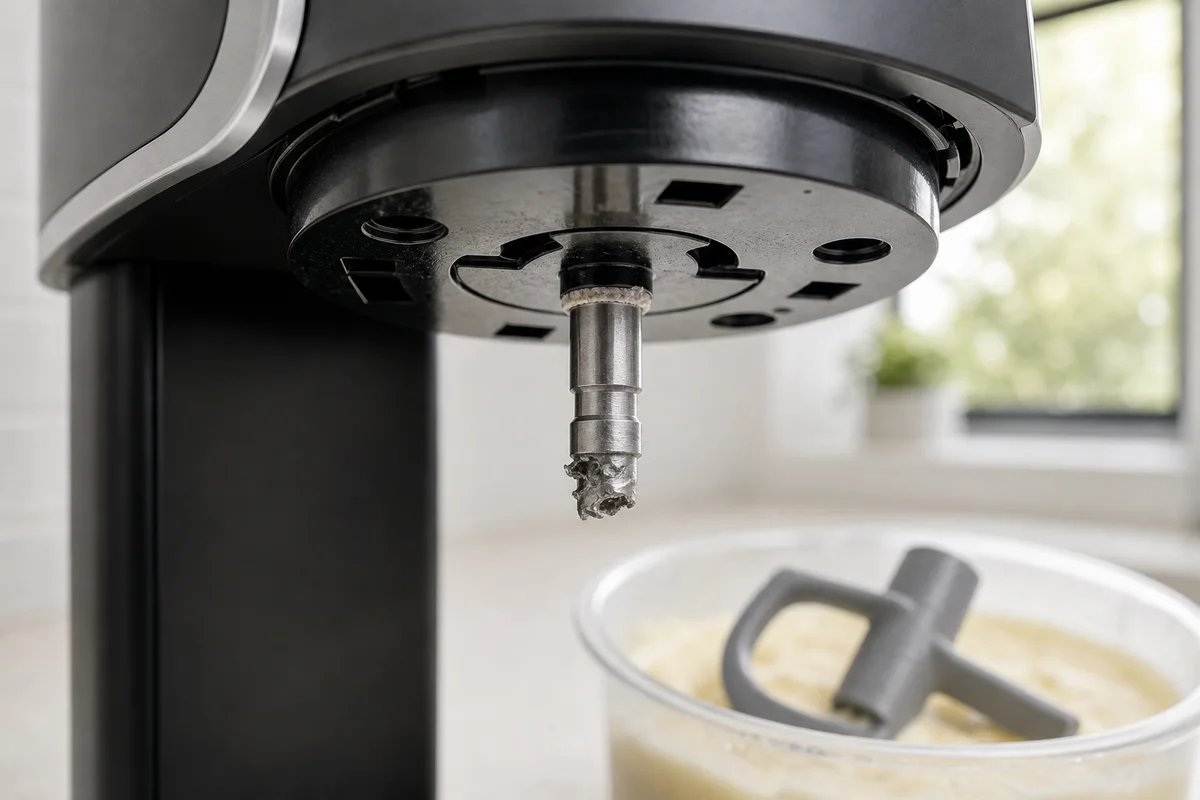
Regular checks of the spindle, Creamerizer paddle and processing lid can reduce the likelihood of preventable residue buildup, uneven engagement and removable-part wear. They cannot eliminate every fault or guarantee that the machine will not overheat.
Spindle, paddle and processing-lid checks
1. Residue on the spindle or mandrel
Residue may interfere with clean paddle seating and contribute to uneven engagement.
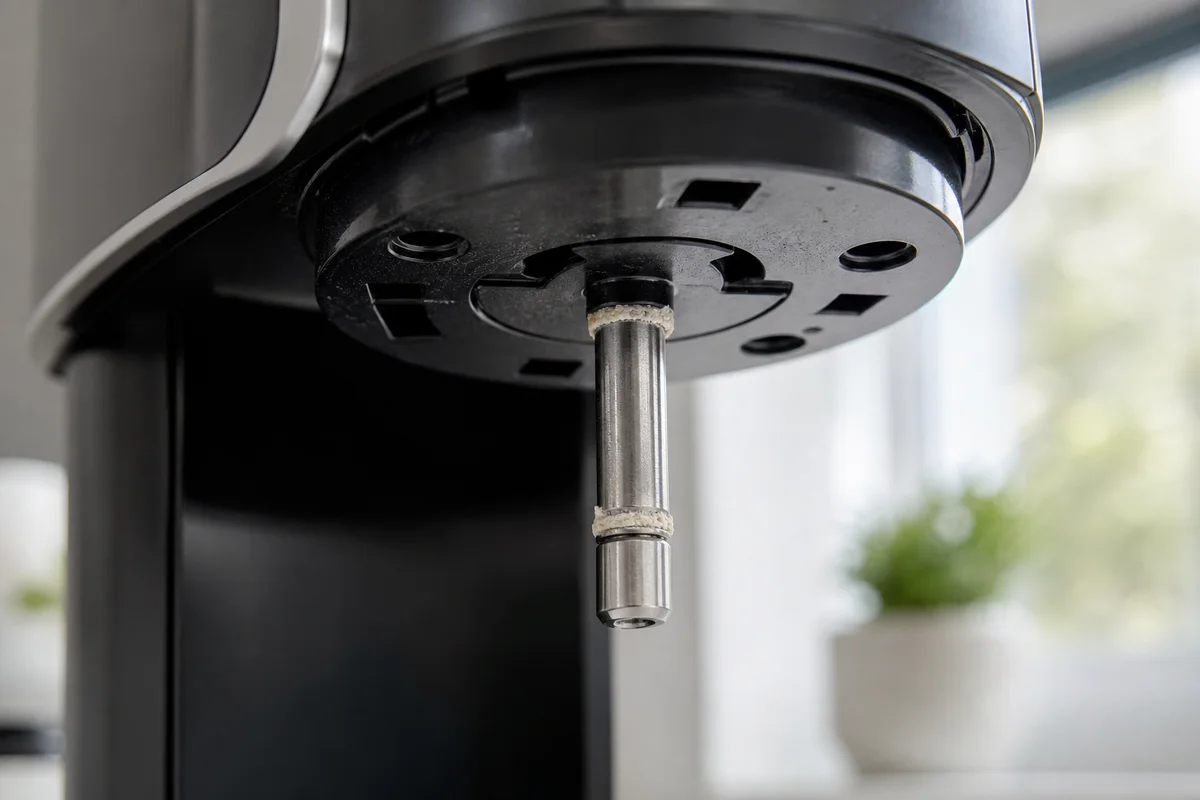
Check. Inspect the exposed metal spindle beneath the motor head after every use. Look for a thin film, coloured specks or dried mixture around the engagement area.
Why it matters. Ninja tells owners to unplug the motor base and wipe the spindle below the control panel with a damp cloth after each use. Residue carried upwards during processing may dry around the spindle and could prevent the paddle connection from seating as cleanly as intended. Uneven engagement may concentrate force on a smaller contact area and contribute to slipping or premature wear.
What to do. Wipe the visible spindle with a slightly damp cloth, then dry it. Do not pour water into the motor head or try to remove the spindle. If hardened residue cannot be removed by normal external cleaning, or the spindle looks scratched, worn, bent, loose or misaligned, leave the machine unplugged and contact Ninja; replacing the paddle alone is insufficient.
2. Residue inside the paddle drive fitting
Trapped mixture may stop the paddle drive fitting from fully engaging with the spindle.
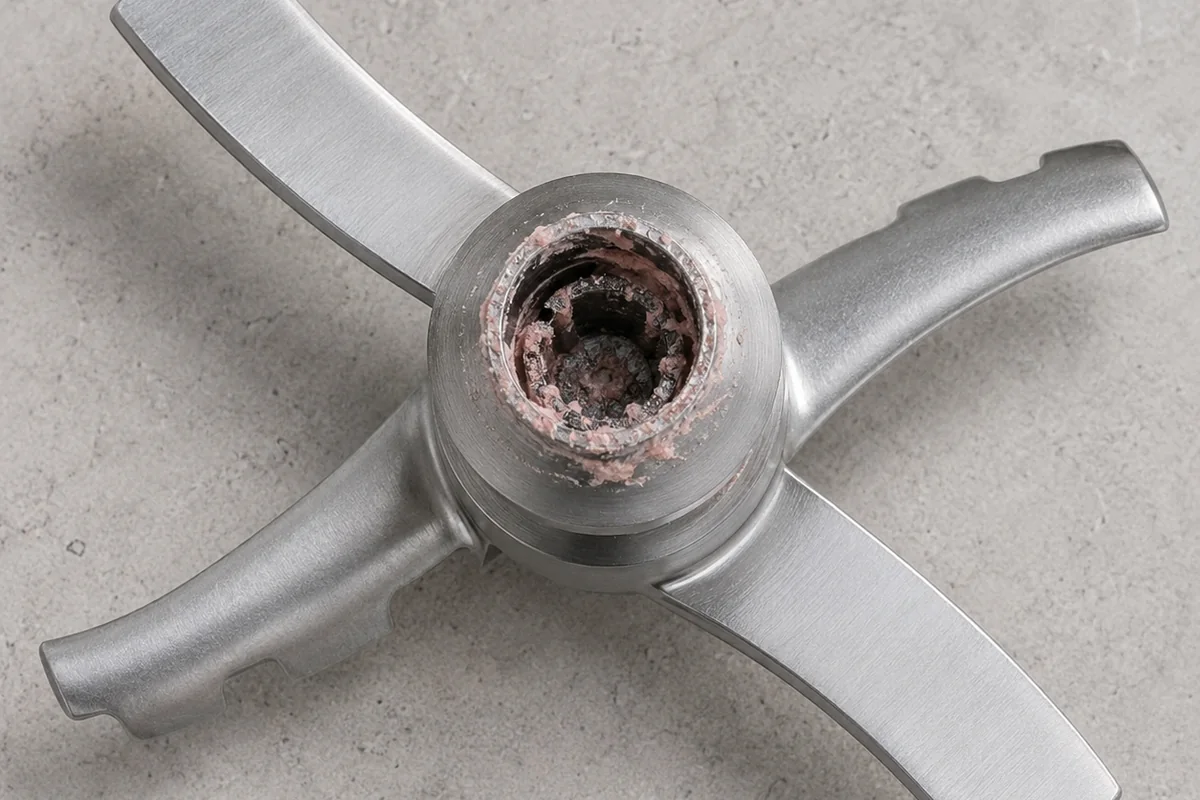
Check. Inspect the cavity and drive fitting at the top of the Creamerizer paddle. Check between the drive teeth, grooves and other engagement surfaces.
Why it matters. Ninja requires the paddle to be removed and washed, and notes that its upper cavity should be clean and dry before processing. Frozen or dried mixture inside the fitting may prevent full engagement with the spindle. If only part of the drive surface carries the load, pressure may be concentrated on fewer contact points, which could contribute to slipping, clicking, rounding or deformation.
What to do. Clean the fitting with warm soapy water or the approved dishwasher method for the exact model. Use a soft brush if needed, then rinse and dry it completely. Never scrape it with a knife, screwdriver or metal pick. If the clean paddle still will not seat normally, or the spindle is marked or the abnormal sound remains, stop and contact Ninja rather than repeatedly testing it. If the spindle itself is visibly worn, deformed or damaged, replacing or cleaning the paddle is not sufficient. Stop using the machine and contact Ninja.
3. Worn or damaged paddle drive teeth
Worn engagement surfaces may slip, catch and damage the drive connection further.
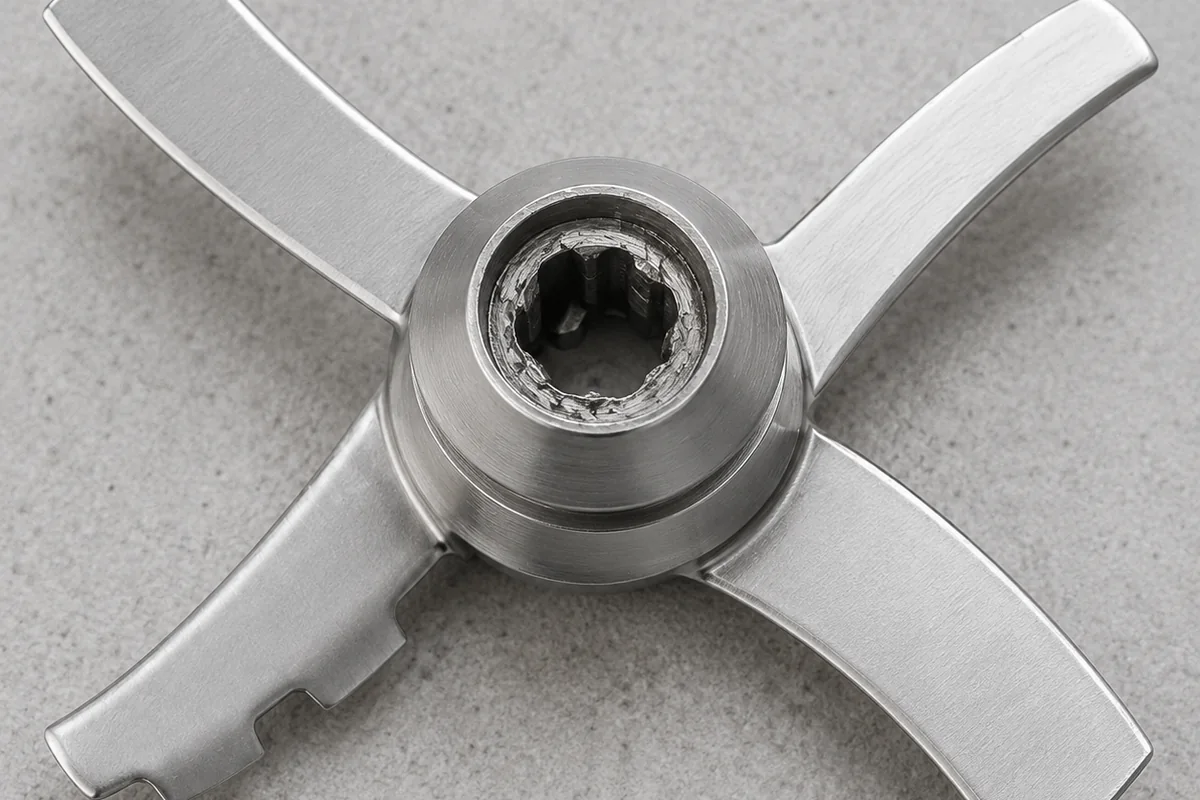
Check. Look closely for rounded edges, flattened teeth or grooves, chips, cracks, distortion, uneven wear, or a fitting that appears enlarged or no longer symmetrical.
Why it matters. The paddle drive fitting transfers movement from the spindle. If some engagement surfaces are damaged, the force is carried by less intact material. The fitting may slip and catch again, producing clicking or knocking and potentially worsening wear on both sides of the connection. Even small visible damage may progress under the substantial load of a hard frozen base.
What to do. Do not run a paddle that looks chipped, rounded, cracked or deformed, and do not test it “one more time.” Replace it with a genuine or manufacturer-approved part for the exact model. If the incident also involved a burning smell, smoke, abnormal heat, repeated overloads or a fallen paddle, leave the machine unplugged and contact Ninja. If the spindle itself is visibly worn, deformed or damaged, replacing or cleaning the paddle is not sufficient. Stop using the machine and contact Ninja.
4. Bent or cracked paddle
A deformed or cracked paddle may rotate unevenly or release fragments.
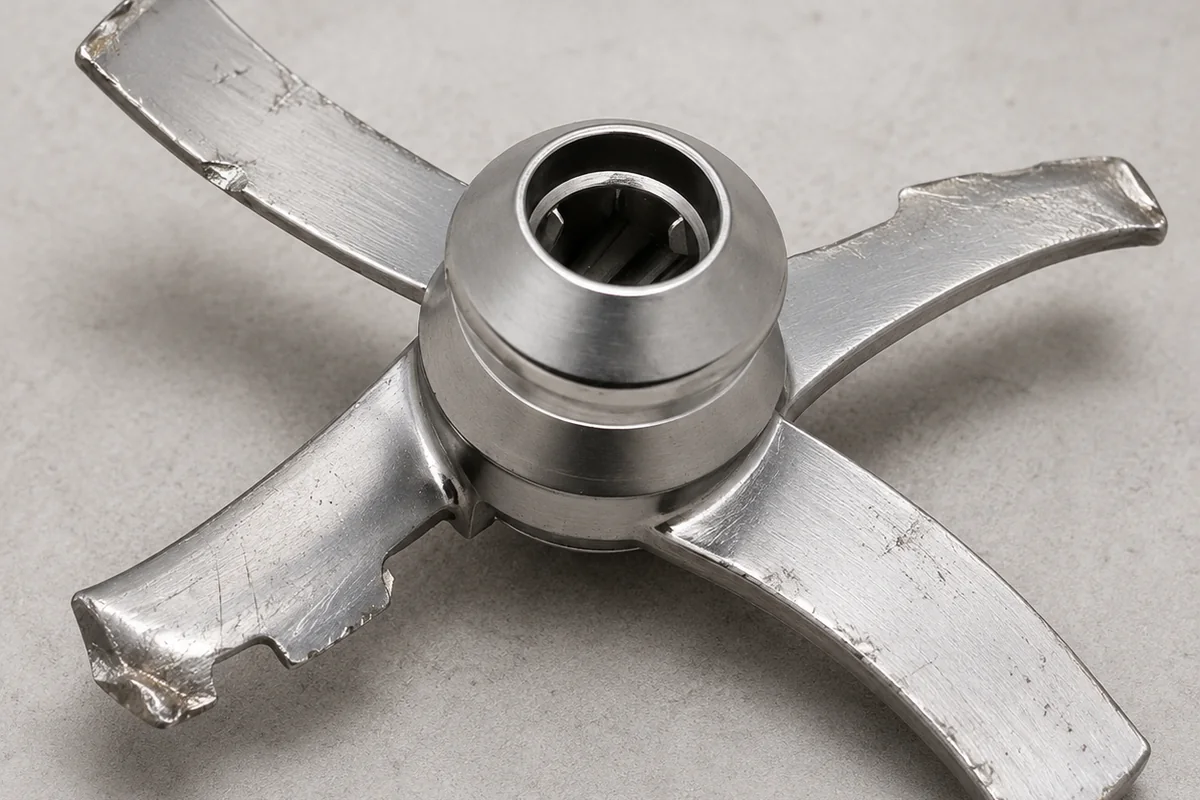
Check. Inspect the entire Creamerizer paddle, not only its upper fitting. Look for bending, cracks, missing material or asymmetry.
Why it matters. Ninja owner guidance tells users to inspect the paddle before use and not use it if it is bent or damaged. A bent paddle may rotate unevenly and move closer than intended to the pint or lid. A crack may grow under load and release fragments. Imbalance may also add vibration or lateral load to the spindle.
What to do. Replace a bent, cracked or incomplete paddle before using the machine again. Discard food that may contain fragments. Contact Ninja instead of replacing only the paddle if it struck a fixed part, the spindle is marked, the machine made a severe abnormal noise, or heat, odour or an error followed the incident.
5. Paddle not seated correctly
Partial or angled seating may concentrate force and allow the paddle to disengage.
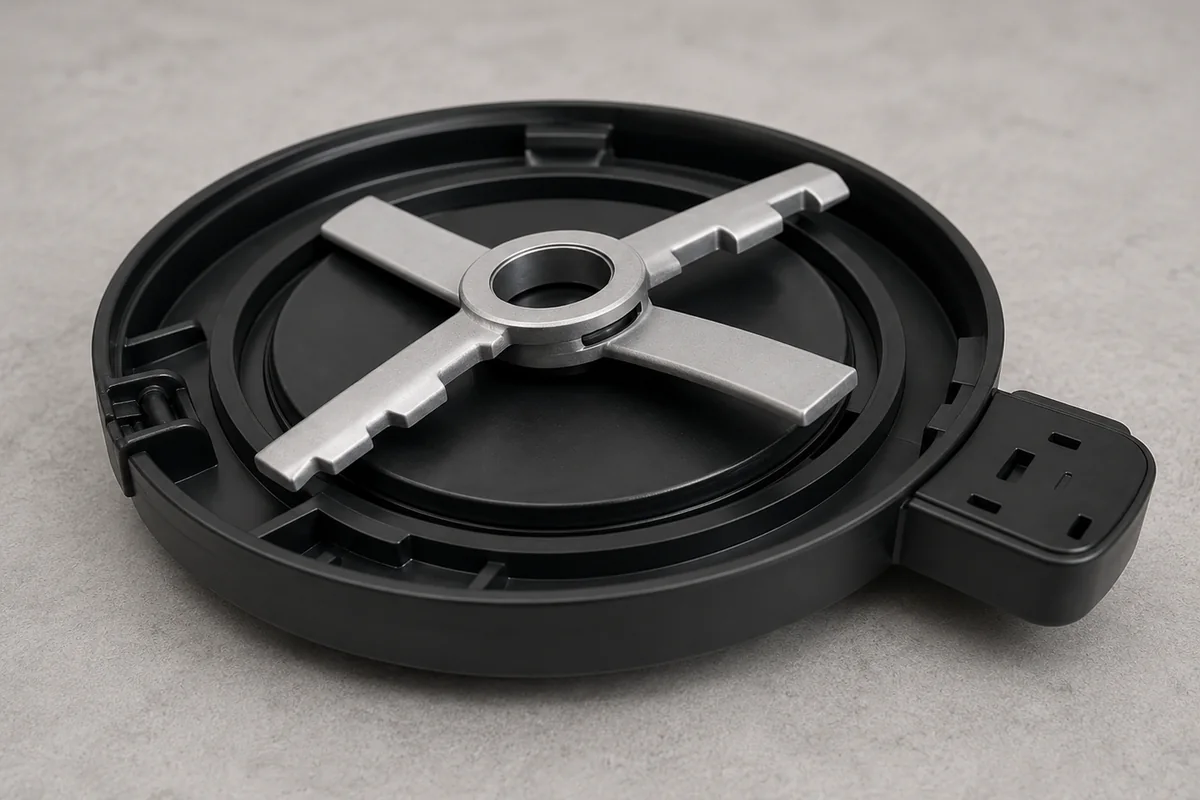
Check. Confirm that the paddle locks into the processing lid normally and hangs straight before the bowl is installed.
Why it matters. Ninja’s assembly guidance requires the paddle to be secured in the lid before processing. A paddle that is tilted or only partly latched may engage the spindle at an angle or over a reduced surface, increasing the chance of slipping, abnormal noise or disengagement.
What to do. Remove the paddle, clean the paddle, latch and engagement areas, then reassemble without forcing anything. Replace the affected removable part if it remains loose, tilted or unable to lock. Contact Ninja if the problem appears to be on the spindle or motor-base side, the paddle has fallen during processing, or correct replacement parts still will not engage normally.
6. Visible damage to the spindle or mandrel
Scraping, deformation, missing metal, deep scoring or frayed material on the spindle indicates damage to a non-removable part of the machine.
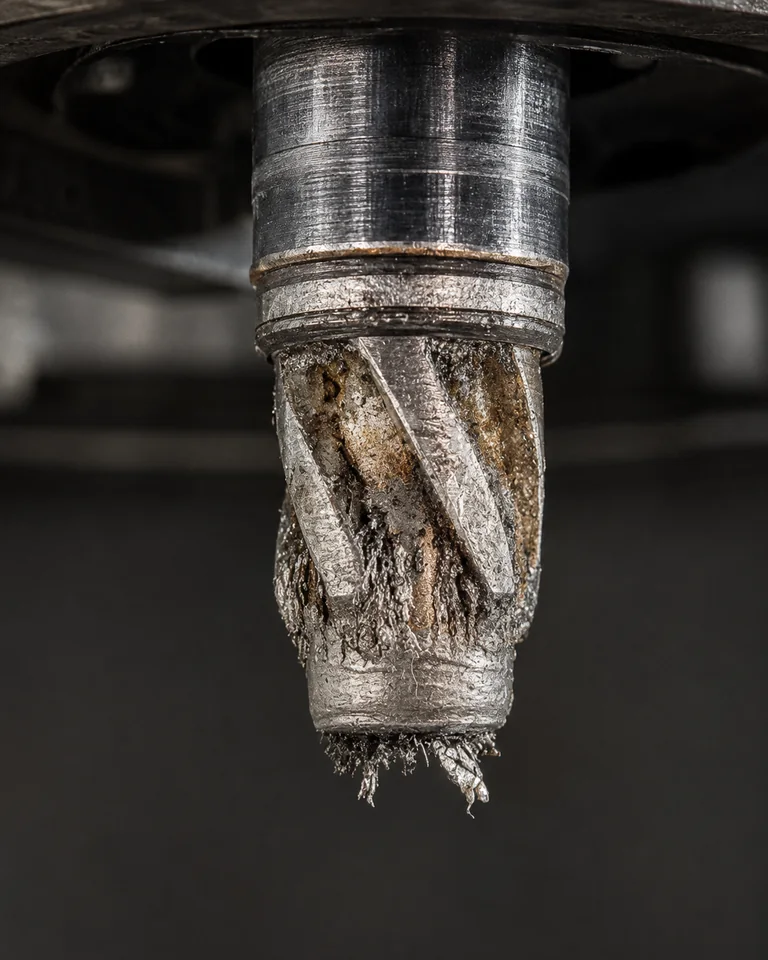
Check. With the machine switched off and unplugged, visually inspect the exposed spindle without pulling, twisting or attempting to remove it. Look for deep grooves, flattened or missing drive surfaces, sharp burrs, torn metal, deformation, looseness or an axis that no longer appears straight. Do not touch sharp or frayed areas with bare fingers.
Why it matters. The spindle transfers the motor’s force to the Creamerizer paddle. Severe wear or deformation can prevent correct engagement and may cause slipping, impacts, abnormal vibration or further damage to both the machine and the paddle. The visible damage may also be only one part of the incident; the condition of the internal drive and motor cannot be assessed from the outside.
The image is an example of severe physical damage, but it does not establish whether the original cause was residue, a worn paddle, incorrect assembly, an unsuitable frozen base or an internal fault.
What to do. Do not run the machine again—not even for a short test. Unplug it and leave it out of use. Do not attempt to file, sand, straighten, lubricate, clean aggressively, remove or replace the spindle yourself. Do not assume that installing a new Creamerizer paddle makes the appliance safe.
Contact Ninja support and provide the model number, serial number, purchase information and clear photographs of the damaged area. Follow Ninja’s instructions regarding assessment, repair or replacement of the appliance.
Discard any preparation that may contain metal or plastic fragments.
7. Residue in the processing lid
Hardened mixture may restrict the latch and hold the paddle out of position.
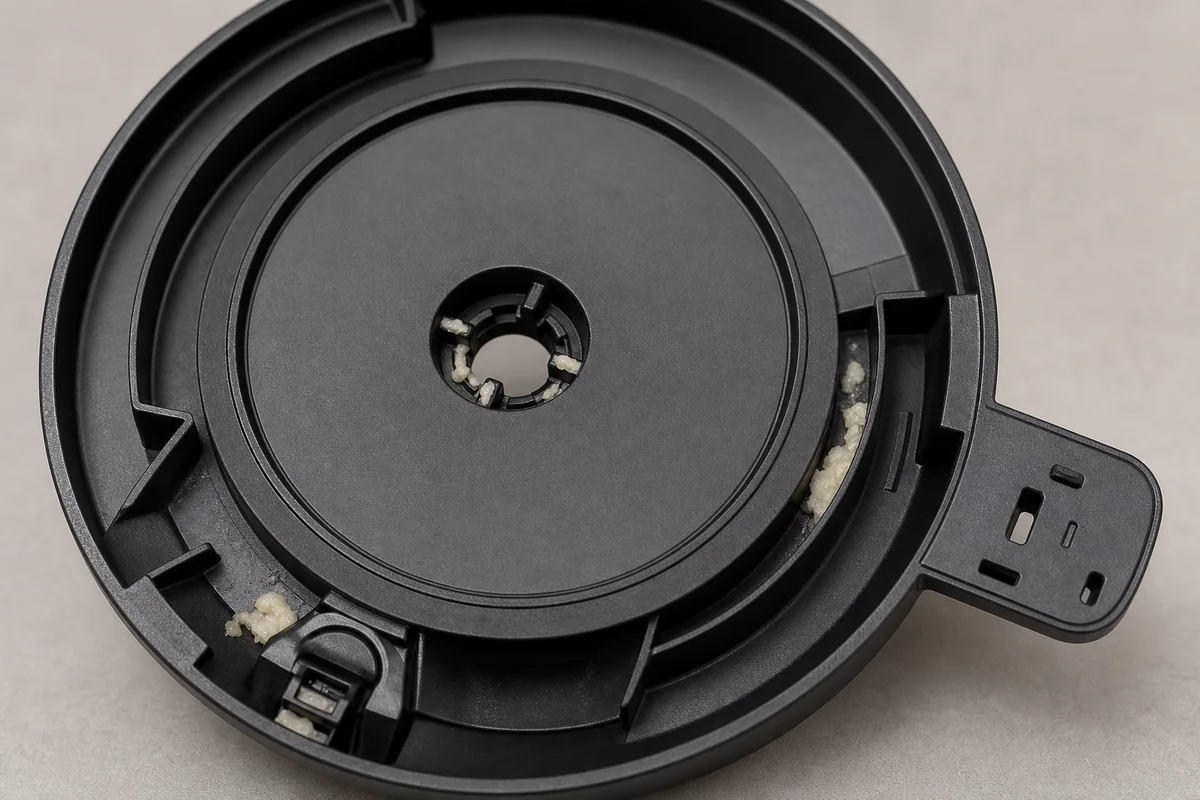
Check. Inspect the paddle-release mechanism, paddle cavity, drain holes and underside of the processing lid.
Why it matters. Ninja directs owners to remove the paddle, run warm water through the release lever and drain holes, and let the lid drain. Mixture trapped around the mechanism may harden, restrict the latch or hold the paddle slightly outside its intended position, creating incomplete engagement.
What to do. Clean the lid exactly as instructed for the model and confirm the release mechanism moves freely after drying. Do not lubricate it unless Ninja specifically directs this. Replace a damaged removable lid; contact Ninja if a clean compatible lid still cannot retain the paddle, the paddle falls during a cycle, or the fixed spindle connection appears abnormal.